What Peyronie's disease is
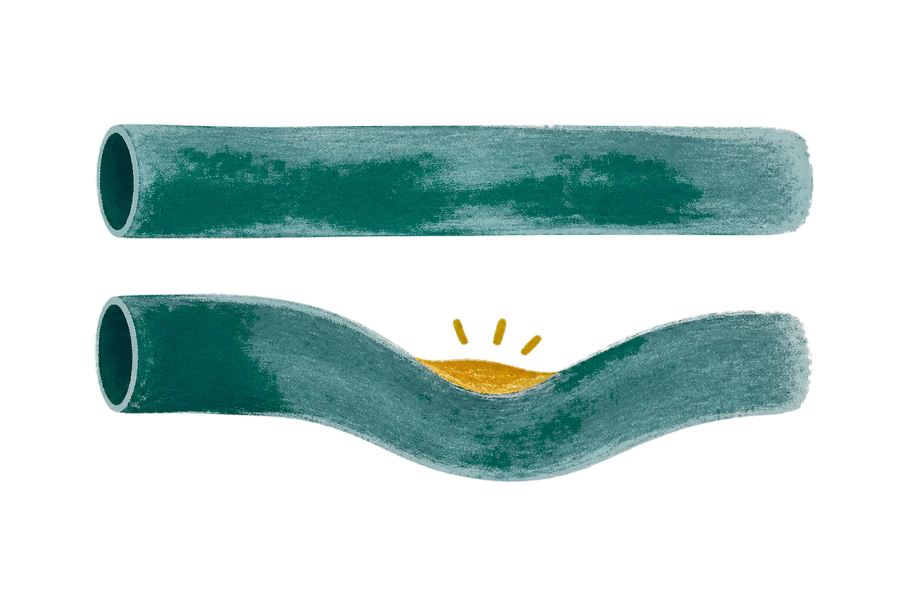
Peyronie's disease is an acquired condition. Scar-like fibrous tissue, called plaque, develops inside the fibrous layer that surrounds the spongy chambers of the penis. Because plaque is inelastic, the penis can no longer expand evenly during erection.
The result is some combination of curvature, narrowing, shortening, pain, or instability. The condition is not contagious, not the patient's fault, and far more common than usually discussed, affecting an estimated one in every eleven adult men.
What is happening physically
During erection, the spongy chambers (the corpora cavernosa) fill with blood and stretch the surrounding fibrous sheath (the tunica albuginea) evenly. In Peyronie's disease, plaque forms within that sheath. Where the plaque sits, the tissue cannot stretch. The unaffected side continues to expand normally, so the erect penis bends toward the plaque, narrows at it, or shortens overall depending on how the scar tissue is distributed.
This is a mechanical problem with anatomical roots. It is why early curvature can change before stabilizing, and why treatment options are matched to whether the plaque is still forming or has matured.
Common symptom clusters
Symptoms rarely appear in isolation. They tend to cluster in three groups, and most men recognize themselves in more than one.
Structural
- Curvature
- New or progressing bend during erection.
- Shortening
- Loss of erect length from restricted expansion.
- Narrowing or hourglass
- Indentation at the plaque site.
- Loss of girth
- Thinner-feeling erection, focal or general.
- Palpable plaque
- A firm area felt under the skin.
Functional
- Painful erections
- Most common in the active phase; usually fades.
- Hinge effect
- Buckling or instability that interferes with penetration.
- Erectile dysfunction
- Loss of rigidity, often co-occurs with Peyronie's.
- Penetration difficulty
- Functional impact even with modest curvature.
Emotional
- Embarrassment
- Avoidance and reluctance to seek care.
- Progression fear
- Worry about what the curve will become.
- Relationship strain
- Common, often unspoken, addressable.
- Anxiety about function
- ED overlap intensifies this.
Acute vs stable phase
Phase is the single most important framing in Peyronie's disease. It changes almost every treatment decision.
- OnsetPlaque begins to form. Pain or shape change may appear.
- ActiveCurvature and length may still be moving. Pain is more common here.
- StableShape settles. Pain typically resolves. Treatment options widen.
| Phase | When | What is typical | Treatment lens |
|---|---|---|---|
| Active phase | 0–12 months from onset |
| Conservative care first; surgery rarely framed. |
| Stable phase | 12–18 months and beyond |
| Full landscape opens, including surgery if deformity is significant. |
How diagnosis works
Diagnosis is a conversation, not a single measurement. A competent evaluation looks at progression, function, and shape together.
- 01
History
When the change started, whether the shape is still moving, pain pattern, and impact on function. The clinician usually leads with timing because phase shapes everything else.
- 02
Physical exam
A focused exam looks for palpable plaque, deformity pattern, and tenderness. It is usually quick and respectful.
- 03
Photographs or measurement
Curvature is best assessed at full erection. Patient-supplied photographs from the front and side are common; pharmacologically induced erection in the office is sometimes used.
- 04
Imaging: only if it changes the plan
Penile ultrasound is reserved for cases where the location of plaque, calcification, or vascular concerns will affect the treatment conversation.
Causes and risk factors
The exact cause is incompletely understood. The dominant hypothesis is that minor, often-unnoticed trauma during normal sexual activity triggers an abnormal scarring response in predisposed individuals. Most patients identify no specific triggering event.
- Age. Most cases present between 40 and 70, though the condition can appear earlier.
- Connective-tissue predisposition.A personal or family history of Dupuytren's contracture or Ledderhose disease is associated with higher risk.
- Vascular health. Diabetes, hypertension, and cardiovascular disease are commonly co-existing rather than causal.
- Pelvic-area trauma or surgery. Less common but relevant where applicable.
- Genetic factors. Familial clustering is observed in a subset of patients.
Most cases have no single identifiable cause. Self-blame is not warranted and rarely accurate.
Treatment depends on the goal
There is no single Peyronie's treatment. The right path starts with naming the goal that matters most right now.
| If your goal is… | The primary path is… | Why |
|---|---|---|
| Reduce curvature or recover length | Traction therapy (RestoreX) | Strongest device-specific trial evidence in the chronic phase. |
| Support erectile function | Vacuum erection device (Osbon ErecAid) + ED workup | Function-oriented; thinner structural evidence. |
| Reduce active-phase pain | Watchful waiting · sometimes injections | Pain usually fades as the phase resolves. |
| Significant stable deformity | Surgical consultation | Plication, grafting, or prosthesis depending on deformity and ED status. |
Treatment fit also depends on phase, individual response, and clinician guidance. This page describes options. It does not prescribe one for you.
When to see a urologist
Most men wait too long, often years, before booking. There is no embarrassment in being early. Urologists see Peyronie's regularly and treat it without ceremony.
Book an evaluation now if
- A new or progressively worsening curve over weeks to months.
- Painful erections that are persistent or worsening.
- Inability to penetrate due to bend, instability, or hinge effect.
- A firm, growing lump felt along the shaft.
Worth a visit even if uncertain
- A long-stable mild curve that has started to change.
- A noticeable indentation, narrowing, or hourglass shape.
- Erectile changes that worry you, regardless of visible curve.
- Concerns affecting your relationship or mental health.
What to bring. A rough timeline of when you first noticed change, photos at full erection from the front and the side if you can, a description of pain and function, and the question you most want answered before you leave.
Where to next
- Symptoms hubStart with the symptom that worries you most, such as curvature, pain, ED, narrowing, or hinge.
- DiagnosisWhat clinicians actually evaluate, why phase matters, and how to make an appointment count.
- When to see a urologistThe signals that warrant evaluation, plus what to bring.
- TreatmentsTraction, vacuum, injections, and surgery, including what each can do and who it fits.
- Clinical evidencePlain-language summaries of the research behind each treatment.
- Medical disclaimerLimits on how to use this content. Always consult a qualified clinician.
Common questions
- Is every penile curve Peyronie's disease?
- No. Lifelong, stable mild curvature is normal variation and not Peyronie's. The condition is acquired, it appears and often changes, and is usually paired with at least one of pain, plaque, shortening, narrowing, or functional difficulty.
- Will it go away on its own?
- Sometimes the active phase resolves with milder long-term deformity. Spontaneous full reversal is uncommon. Most men benefit from at least one clinical conversation rather than waiting indefinitely.
- Did I cause this?
- Almost certainly not in any way that you should feel guilt about. The likely contributors are minor trauma during normal sexual activity and a constitutional predisposition. Most patients identify no specific event.
- Will treatment fully reverse the curve?
- Realistic outcomes vary by treatment, phase, severity, and individual response. Traction therapy can meaningfully reduce curvature in many men with chronic disease; surgery offers more correction but is later-stage and carries trade-offs. Full straightening is not promised by any honest source.